Torn between a lock-and-leave luxury condo and the character of a historic rowhouse in Northwest DC? You are not alone. If you are relocating or moving up, the right call comes down to your daily routine, budget rhythm, and tolerance for renovations. In this guide, you will get a clear, side-by-side look at lifestyle, carrying costs, lending and resale factors, parking, and historic-district rules so you can choose with confidence. Let’s dive in.
Start with how you live
Choosing between a condo and a rowhouse starts with your weekday routine and travel schedule.
- If you want low-effort living, a full-service condo can be ideal. Many luxury buildings offer concierge access, security, fitness spaces, and bundled services. You trade hands-on upkeep for predictability and convenience.
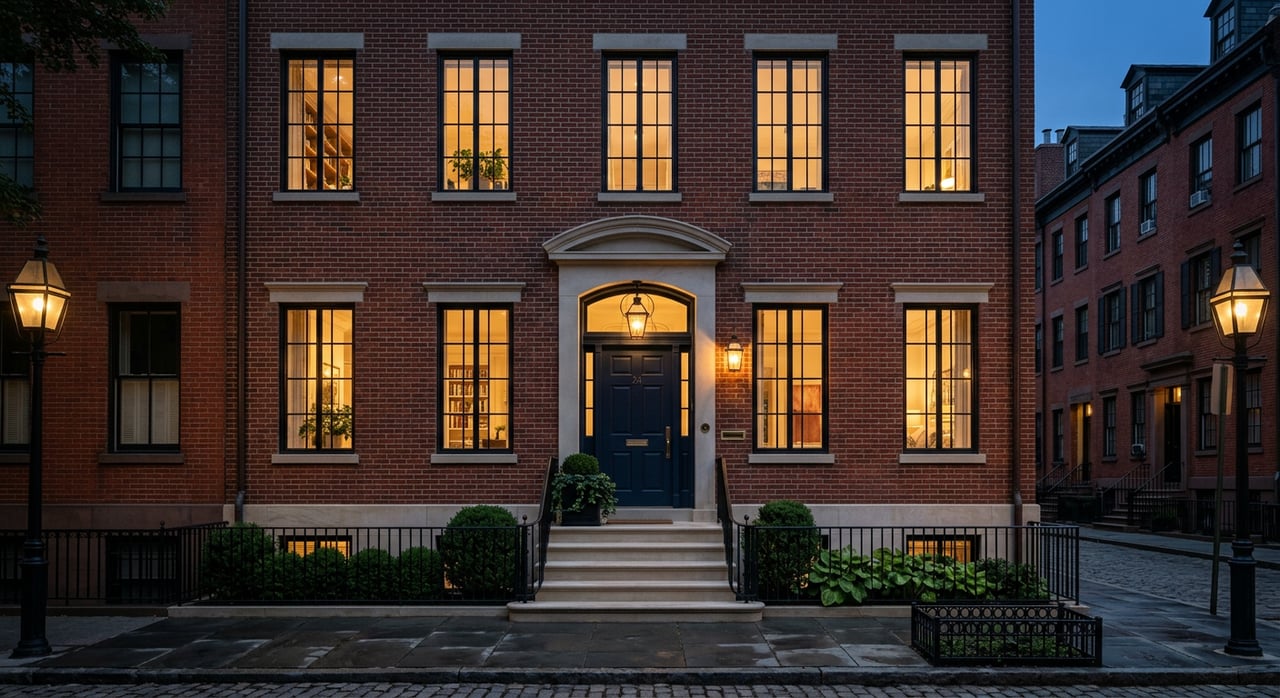
- If you want privacy, outdoor space, and control, a rowhouse delivers a dedicated entry, yard or rooftop, and more interior square footage per dollar on many blocks. You also take on exterior maintenance, from roofs to masonry, plus snow and landscaping.
Think about what you value most. If convenience, building services, and a predictable monthly outlay are top priorities, a condo tends to fit. If private outdoor space and full control of your property matter more, a rowhouse is likely the better choice.
Privacy, noise, and security
- Condos, especially secure boutique and high-rise buildings, often provide stronger building security with keypad or concierge protocols and limited-access entries.
- Rowhouses offer no shared hallways and a private front door. You will still have typical city adjacencies like party walls and street activity.
Parking and commuting
- Many luxury condos include assigned or deeded parking, which simplifies daily life and guest arrivals.
- On rowhouse blocks, off-street parking is less common. Street rules apply under DC’s Residential Permit Parking program. Always check block signage and visitor-permit options using the District’s guidance on Residential Permit Parking and visitor permits.
What you will pay each month
Your total carrying cost depends on housing type, services, and condition. Use these building blocks when you model monthly affordability.
HOA and condo fees
Condo fees vary widely by building and service level. The District’s median monthly condo or HOA fee sits around $505 according to recent federal survey data, and full-service urban buildings often exceed that level. Boutique luxury towers can reach $800 to $1,500+ per month depending on amenities and staffing. See the Census Bureau’s overview of condo and HOA fees for context.
Tip: Normalize by size. Divide the monthly fee by a unit’s interior square footage so you can compare two condos, or compare a condo’s fee per square foot to your expected rowhouse maintenance reserve per square foot.
Property taxes and transfer costs
DC’s residential real property tax rate for Class 1A is $0.85 per $100 of assessed value. Higher-value transactions can trigger additional tiers or surcharges, and deed transfer and recordation taxes apply when you buy. Review current rates via the Office of Tax and Revenue’s page on real property tax rates and confirm your scenario with your lender or advisor.
Insurance differences
- Condos typically use an HO-6 policy for interiors, finishes, personal property, liability, and possible loss assessments. The association’s master policy covers the building shell and common areas.
- Rowhouses use broader homeowners policies that include the structure. Your cost depends on coverage level and the home’s systems and materials.
For a refresher on policy types, see this overview of homeowners insurance forms.
Maintenance reserves
Older, historic rowhouses require ongoing care. A common planning rule is to set aside 1 to 3 percent of the home’s value per year for maintenance, increasing the percentage for pre-war buildings or if major systems need updating. This contrasts with condos where many exterior and system costs are embedded in the monthly fee. For guidance on setting a reserve, see this piece on the home maintenance budget rule of thumb.
Price context to frame expectations
DC’s citywide median sale price has recently tracked in the mid 600 thousand range, with wide variation by neighborhood and product type. Renovated historic rowhouses on prime blocks in Dupont, Georgetown, Kalorama, and nearby corridors often command significant premiums over the city median, while luxury condos span a broad range from more attainable one-bedrooms to multi-million-dollar penthouses with extensive amenities and views. Expect to pay several hundred thousand dollars or more for private outdoor space, larger square footage, and parking on the best blocks.
Financing and resale: what changes by property type
Condo project approvals and lending
Condo purchases involve building-level underwriting in addition to your personal loan approval. Agencies and lenders review the project’s reserve health, investor concentration, litigation, and other factors to determine if a building is eligible for conventional financing. If a project lacks approval or has material issues, your loan options can narrow and timelines can slow. Learn what underwriters look for in condominium project mortgages.
Rowhouses are typically underwritten as single properties, which avoids project-level approval and can simplify financing.
Resale and buyer pools
Liquidity depends on price band and product. Entry-level condos often draw a broader pool, while high-end condos and large, renovated rowhouses target smaller, more specialized buyer groups. Ask your agent for building- or block-level days on market and sale-to-list ratios before you choose.
Rules that affect renovations and renting
Historic-district reviews for rowhouses
Much of Northwest DC, including neighborhoods like Georgetown, Dupont Circle, Logan Circle, and Kalorama, sits within local or federal historic overlays. Exterior work that changes façades, windows, rooflines, or cornices typically requires review and a Certificate of Appropriateness through the Historic Preservation Office and Review Board. That adds calendar and material considerations. The District’s notice about historic preservation processes is a helpful primer.
Practical takeaway: interior modernization is often straightforward. Exterior changes usually need approvals and historically appropriate materials, which can raise cost and extend timelines.
Short-term rentals and leasing rules
DC requires licenses for short-term rentals and generally limits most permits to a host’s primary residence. Many condo bylaws further restrict or prohibit short-term rentals and may cap the number of long-term leases. Review DC’s licensing guidance via the Department of Licensing and Consumer Protection at DLCP’s main portal and confirm building bylaws before you count on rental income.
Tenant Opportunity to Purchase Act (TOPA)
If you consider a rowhouse with rental units, the Tenant Opportunity to Purchase Act can affect sale timing and structure. Processes and timelines vary and can extend closings for multi-unit properties. Review DHCD’s resources on TOPA assistance and process early if you plan to buy or sell a tenant-occupied building.
A quick decision checklist
Use this to pressure-test your preference.
- Do you travel often or want concierge, security, and minimal upkeep? Choose a condo and verify what the HOA fee covers.
- Do you want private outdoor space and full control over alterations? Choose a rowhouse and budget for exterior maintenance and historic review if applicable.
- Do you need guaranteed parking or easy guest parking? Condos with deeded spaces simplify that. For rowhouses, confirm off-street options and review Residential Permit Parking and visitor permits.
- Will you rely on FHA or VA, or want broad resale appeal? Confirm project eligibility early. See Freddie Mac’s guidance on condominium project mortgages.
- Will you ever rent the property or host short-term guests? Check building bylaws and DC’s short-term rental licensing rules.
How to compare options fast
When you tour a condo and a rowhouse the same day, use this simple approach to get apples-to-apples clarity.
- Build an all-in monthly for each property.
- Mortgage principal and interest.
- Property tax using the current real property tax rates.
- Insurance: HO-6 for condos vs. HO-3 or HO-5 for rowhouses. See a refresher on policy types.
- HOA or condo fee, plus any recurring parking or amenity charges.
- Maintenance reserve: use 1 to 3 percent annually for historic rowhouses, then divide by 12 for a monthly estimate. See the maintenance budget rule.
- Normalize by square footage.
- Divide the monthly total by interior square footage to compare the true monthly cost per square foot.
- Assign value to convenience.
- Note travel frequency, need for security, and how often you plan to use building amenities or outdoor space.
When a luxury condo is the right fit
- You travel frequently and want concierge support, package handling, and consistent security.
- You prefer predictable costs over episodic projects and special assessments.
- You want assigned parking or EV-ready garages without the hassle of adding infrastructure yourself.
- You plan to keep finishes current with straightforward interior updates rather than exterior renovations.
When a historic rowhouse is the right fit
- You value a private entry, multiple levels, and outdoor space for dining or gardening.
- You want control over design decisions and are comfortable managing contractors and permits.
- You prefer your monthly budget to reflect what you choose to tackle each year rather than a set building fee.
- You are attracted to the architectural character common in Northwest DC’s historic blocks.
How The AiR Group helps you choose
You deserve advice that blends discretion, data, and on-the-ground experience. The AiR Group pairs boutique, principal-led representation with AI-enabled analysis to model your all-in monthly costs, screen condo projects for financing risks, and map historic-district constraints before you commit. We also surface off-market and early-access opportunities that can change your choice set, whether you are leaning condo convenience or rowhouse privacy.
Ready to compare your short list with clarity? Schedule a private consultation with The AiR Group.
FAQs
What is the main cost difference between DC luxury condos and rowhouses?
- Condos concentrate exterior and common-area costs in a monthly HOA fee, which often exceeds DC’s median of about $505 and can reach $800 to $1,500+ in full-service buildings. Rowhouses avoid HOA fees but require a maintenance reserve, commonly 1 to 3 percent of home value per year, plus standard taxes and insurance.
How does condo project approval affect my mortgage in DC?
- Lenders evaluate the building’s reserves, investor ratios, and litigation. If a project is not eligible, your loan options can narrow and timelines can stretch. Review Freddie Mac’s guide to condominium unit mortgages.
What are DC’s property tax rates for homes?
- The base residential rate is $0.85 per $100 of assessed value, with potential additional tiers at higher values. Check current details on the District’s page for real property tax rates.
Can I use a DC condo or rowhouse for short-term rentals?
- DC requires licenses and generally limits short-term rentals to a host’s primary residence. Many condos restrict short-term stays and cap long-term leases. Start with the Department of Licensing and Consumer Protection at DLCP’s portal.
Do I need approvals to renovate a rowhouse in Dupont, Logan, or Georgetown?
- Likely yes for exterior work. Many Northwest blocks sit in historic districts, and changes to façades, windows, and rooflines typically require HPO and HPRB review. See the District’s historic preservation overview.
How should I think about parking if I buy a rowhouse in NW DC?
- Confirm whether the property has a garage or secure off-street space. If not, plan to use the District’s Residential Permit Parking system and visitor permits. Learn more about RPP and visitor permits.
How much should I budget to maintain a 100-year-old rowhouse?
- A common planning range is 1 to 3 percent of current value per year, increasing with age, complexity, and deferred maintenance. See guidance on the maintenance budget rule of thumb.
What insurance do I need for a condo versus a rowhouse?
- Condos typically use HO-6 for interior finishes and personal property, coordinated with the association’s master policy. Rowhouses use standard homeowners coverage that includes the structure. Review policy types in this insurance overview.